
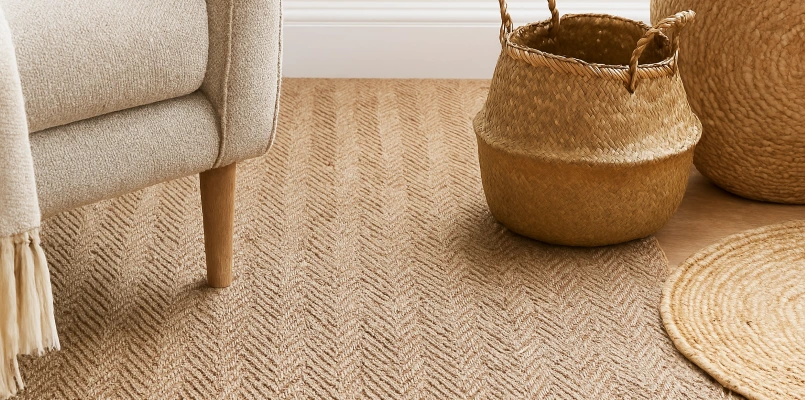
Step Into Calm: Why More Irish Homes Are Choosing Natural Carpet Flooring
Imagine walking barefoot in a toxin-free home that feels grounded and serene. Natural carpets offer more than aesthetic appeal—they enhance the air quality, create warmth, and reflect a commitment to sustainable living.
When it comes to the interior of your home, flooring is one of the largest investments you’ll make—often accounting for 7–20% of the interior fit-out budget. Choosing the right flooring means getting value not just in euros, but in comfort, health, and long-term quality of life. In this guide, we break down everything you need to know about choosing natural fibre carpets, particularly in the Irish market where interest in eco-friendly carpets Ireland, natural carpets Ireland, and non-toxic options continues to grow.
What Is a Natural Fibre Carpet (And Why It Matters)
Natural fibre carpets are made from renewable, biodegradable materials such as wool, plant-based fibres like sisal, jute, seagrass, and coir, as well as semi-natural fibres like TENCEL™ and viscose. These materials come from nature—not petroleum—and offer a safer, more sustainable alternative to synthetic carpets. These plant fibre carpets come from nature—not factories—and offer a safer, more sustainable alternative to synthetic options. What sets natural carpets apart isn’t just their eco credentials, but how they feel and function in a living space.
They are generally free from harmful VOCs (volatile organic compounds) and microplastics—especially wool and plant-based fibres. While newer semi-natural materials like TENCEL™ and viscose are more sustainable than synthetics, their chemical processing varies, so fibre transparency is essential. Backings are often made from natural latex or jute, further reducing chemical exposure. And while synthetic carpets might degrade over time, natural fibres wear in—not out—gaining character and texture. Choosing a natural fibre carpet means creating a healthier, more grounded home for years to come.
See our blog on the differences between natural and synthetic carpets.
Top 5 Eco-Friendly Carpet Options for Irish Homes
1. Wool Carpets
Wool is a natural protein fibre sourced from sheep and has been used in carpet-making for centuries. It’s known for its softness, thermal insulation, and resilience, offering long-term performance and comfort, and is typically suitable for use in most areas of the home.
Pros:
- Naturally flame-resistant and hypoallergenic
- Warm, soft, and durable
- Excellent insulation properties
- Naturally anti-static, reducing dust and improving air hygiene
- Long-lasting with proper care
- Easy to clean and maintain
Cons:
- Typically more expensive than synthetic carpets due to material quality and sustainability
- Cleaning with harsh chemicals may affect colour or texture, especially in lighter or undyed wool carpets. Only use wool-safe cleaning products
- Like most natural fibres, prolonged exposure to direct sunlight may cause gradual fading—especially in lighter or undyed wools
- In rare cases, untreated wool carpets may be vulnerable to moths. Most modern carpets, however, are treated with moth-repellent solutions to prevent damage.
Installation: While professional installation is always recommended, wool carpets are generally easy to install using a suitable underlay and the standard gripper system commonly used in Ireland.
Installation costs including underlay and accessories typically range from €15–€30/m² depending on area, quality underlay, and location. Always request a detailed estimate.
Lifespan: 10–25 years depending on yarn quality, manufacturing process, care, maintenance, and area of use
Price Range: €30–€120/m² (carpet only), depending on yarn quality, brand, and construction weight (heaviness of wool per square metre)
2. Plant Fibre Carpets (Sisal, Jute, Seagrass, Coir)
Plant fibre carpets are made from fast-growing, renewable plants such as sisal, jute, seagrass, and coir. These materials are 100% natural and biodegradable and offer a rich, natural texture.
Pros:
- Hard-wearing and durable (especially sisal and coir); ideal for high-traffic areas
- Naturally anti-static and moth-resistant
- Made from 100% natural material
- Made from rapidly renewable resources with minimal environmental impact compared to synthetic carpets
- Non-toxic: typically made without harmful chemical treatments. It’s important to check that the backing is made with natural latex, which helps minimise VOC emissions.
Cons:
- Prone to staining: the absorbent nature of plant fibres makes spills difficult to clean and may leave permanent marks. Some carpets can be treated with stain guards, but compatibility must be checked to avoid texture or colour changes.
- Sensitive to moisture and humidity
- Rougher underfoot than wool or synthetics — especially with sisal and coir
- Requires specialised fitting knowledge — improper installation can lead to shrinkage, warping, or failure. Fewer retailers offer it, and installation costs are typically higher.
Installation: Plant fibre carpets typically require specialised fitting techniques, which are less flexible and more prone to movement. The most common double stuck (using glue to stick underlay to subfloor and carpet to underlay) installation method used.
As a result, installation costs are higher, typically ranging from €15–€35/m² including underlay and accessories. Always ensure installers have experience with natural fibre flooring.
Lifespan: 7–12 years depending on fibre type, foot traffic, and humidity levels. Proper maintenance and indoor-only use can significantly extend longevity.
Price Range: €49–€160/m² depending on fibre type, weave, and origin. Jute is generally more affordable; sisal and seagrass are more durable and textured.
3. Sisal & Wool Mix Carpets
Blending the strength of sisal with the softness of wool, these carpets combine the best of both natural fibres. The result is a versatile flooring solution that offers texture, durability, and warmth—ideal for both contemporary and classic interiors.
Pros:
- Combines durability of sisal with comfort of wool
- Naturally anti-static and low in VOCs
- Offers a more refined look than raw plant fibres alone
- Balanced texture—less coarse than pure sisal or coir
Cons:
- Less durable than 100% sisal in high-traffic zones
- Can be prone to moisture sensitivity due to sisal content
- Typically more expensive than standard sisal or wool options
Installation: Requires skilled installation, often using the double stick method due to sisal content. Choose experienced installers familiar with natural fibre blends. Expect installation costs between €18–€35/m², including underlay and adhesives.
Lifespan: 10–15 years with proper care and indoor use only.
Price Range: €65–€180/m² depending on blend ratio, weave type, and brand.
4. Recycled Carpets
Recycled carpets are made using repurposed materials—most commonly recycled PET (from plastic bottles), regenerated nylon (such as ECONYL®), or recycled polyester (like ECOSE® technology used in some insulation and textiles). These carpets offer a more sustainable alternative to virgin synthetic fibres by reducing landfill waste, conserving resources, and lowering energy use in manufacturing. While not 100% natural, they are considered highly eco-conscious and practical flooring choices, especially for those balancing sustainability with performance.
Pros:
- Made from post-consumer or industrial waste (e.g. recycled plastic bottles, cotton)
- Reduces environmental impact compared to new synthetic production
- Often more stain-resistant and durable than some natural options
- Wide range of colours, patterns, and textures available
Cons:
- Not biodegradable (though far less harmful than virgin synthetics)
- May still contain minor traces of chemicals or VOCs depending on backing or dyeing process
- Texture and softness can vary—less “natural” underfoot feel than wool or plant fibres
Installation: There are various types of recycled carpets on the market, and the installation method may vary depending on the backing and construction. Most can be fitted using either the standard underlay and gripper system or the double stick method. Installation costs typically range from €12–€35/m², depending on the product type and installation complexity.
Lifespan: 8–15 years depending on fibre type, weave quality, and usage area.
Price Range: €35–€95/m² depending on material source, construction, and brand.
5. Non-Toxic Carpets
Non-toxic carpets are designed with health and indoor air quality in mind. They are made using materials and processes that avoid the release of harmful VOCs (volatile organic compounds), formaldehyde, synthetic dyes, and chemical treatments. This makes them a popular choice for families, allergy sufferers, and eco-conscious homeowners.
Common features include:
- Natural fibres like wool, sisal, jute, or seagrass
- Natural latex or jute backings instead of synthetic adhesives
- Minimal or no chemical stain guards, flame retardants, or mothproofing agents
- Certifications like GUT, Cradle to Cradle, or Green Label Plus
These carpets are ideal for anyone looking to minimise chemical exposure, especially in bedrooms, nurseries, or living areas.
Pros:
- Low VOC emissions, improving indoor air quality
- Safer for children, pets, and those with chemical sensitivities
- Often made from natural or recycled materials
- Increasing availability of certified, third-party tested options
Cons:
- May require more care, especially without chemical stain protection
- Limited colour and treatment options compared to synthetic carpets
- Higher cost due to sustainable production and certification processes
- Widespread greenwashing: Many products marketed as “eco-friendly” or “non-toxic” lack transparency or certification. Without clear labelling (e.g. Green Label Plus, Cradle to Cradle), it’s difficult for consumers to verify claims, making it harder to distinguish genuinely safe options.
Installation:
To maintain low chemical exposure, non-toxic carpets should be installed with non-toxic adhesives or mechanical methods (grippers and underlay). Use of natural rubber or jute underlays is often recommended. Installation cost depends on carpet type but typically ranges from €15–€30/m².
Lifespan:
10–20 years depending on material and usage
Price Range:
€50–€150/m² depending on fibre, construction, and certifications
Top 4 Natural Carpet Brands in Ireland
| Brand | Carpet Lead Times | Bespoke Rug Lead Times | Installation Offered | Price Range (€/m²) | Where to Buy | Location |
| Crucial Trading | 2–3 weeks | 6-8 weeks | Through retailer or subcontract | €55–€270 | Small selection of specialist retailers | UK |
| Alternative Flooring | 2–3 weeks | 4-6 weeks | Through retailer or subcontract | €40–€170 | Major carpet & interior design shops | UK |
| Fibre Flooring | 2–3 weeks | 4-6 weeks | Through retailer or subcontract | €40–€235 | Major carpet & interior design shops | UK |
| Deco Designs | 1–2 weeks | 1–2 weeks | Direct from supplier (DD) or subcontract | €40–€215 | Direct or via interior designers | Ireland |
What to Watch Out For (And How to Avoid Mistakes)
Natural flooring is a premium choice—but it also comes with its own learning curve. Unlike mass-market synthetic carpets, natural materials require knowledge, care, and the right tradespeople. Here’s what to know before making your final decision:
1. Care & Cleaning Expectations
Natural carpets behave differently than synthetics. Plant fibres like sisal or jute are highly absorbent and can’t be wet cleaned. Wool is more forgiving but still needs wool-safe products. Using the wrong cleaning method can cause shrinkage, staining, or permanent damage—especially with plant-based fibres.
How to avoid it:
Work with a supplier who will educate you on care requirements and provide clear aftercare instructions. Ask upfront about cleaning methods for the exact product you’re choosing.
2. Incorrect Installation Methods
Many fitters are unfamiliar with natural flooring, especially sisal and coir. These materials require specialised adhesives, underlays, and experience to avoid shrinkage, bubbling, or failure.
How to avoid it:
Only hire installers with proven experience fitting natural fibre carpets. Ask for references or photos of previous work.
3. Retailers Avoid Natural Carpets
Some retailers actively push clients away from natural materials—not because the product is inferior, but because it’s harder to install and margins are tighter. This often leads to bias in recommendations.
How to avoid it:
Do your own research. If a supplier doesn’t offer natural flooring, it may reflect their business model—not the product’s quality.
4. Greenwashing and Misleading Claims
Terms like “eco”, “natural”, or “sustainable” are often used loosely. Some carpets marketed as ‘natural’ may still have synthetic backings, harmful treatments, or petrochemical-based adhesives.
How to avoid it:
Check the material composition, backing type, and whether the product has been tested for VOCs or harmful chemicals. Ask for technical specs, not just marketing brochures.
Most Common Questions
- What is the best natural carpet material?
Wool and sisal are among the most durable and time-tested natural carpet fibres. Wool offers comfort, warmth, and resilience, while sisal provides exceptional toughness and texture — ideal for high-traffic areas.
Best material depends on your lifestyle, design preferences, and where the carpet will be used. Each fibre comes with specific advantages and trade-offs.
Read our full guide above for a breakdown of pros, cons, installation tips, and price comparisons to help you choose the right natural carpet for your home.
- Are natural carpets suitable for underfloor heating systems?
Yes — most natural carpets can be used with underfloor heating systems. The key is not just the carpet itself, but the total tog rating of the carpet + underlay combined, which should typically not exceed 2.5–2.7 tog for effective heat transfer. Always check the manufacturer’s specifications.
Ensure your installer selects an underlay specifically designed for underfloor heating to avoid blocking heat and compromising efficiency.
- How do I clean natural carpets?
Always request a care and cleaning guide at the time of purchase. Different natural fibres require specific cleaning methods, and using the wrong one is the fastest way to ruin your carpet. Get the right advice upfront. Ask for fibre-specific maintenance instructions when ordering, and never assume a generic method will work.
- Is sisal carpet slippery on stairs?
No — sisal carpet is not slippery. In fact, it’s often chosen because of its coarse, textured weave that provides excellent grip underfoot. This makes it a popular choice for stair runners and landings where traction and safety are a priority.
- What is the best carpet fibre for asthma and allergy sufferers?
Why Wool?
- Naturally hypoallergenic: Wool resists the growth of bacteria, mould, and dust mites—common asthma and allergy triggers.
- Traps allergens: Its natural fibres trap dust and airborne particles until vacuumed, reducing exposure.
- Low VOC: Wool carpets with natural latex or jute backing release little to no harmful chemicals.
- Regulates humidity: Wool helps stabilise indoor moisture levels, reducing mould risk.
Ready to Choose Natural? Here’s What to Do Next
If you’re exploring your options, take a look at our Natural Carpet Collection. We offer a curated range of high-quality, sustainable carpets — from wool to plant fibre blends — designed for Irish homes.
- Add your favourites, share selections, or order free samples
- We provide site surveys, expert material advice, and tailored support for homeowners and interior designers
- Professional installation is available nationwide by our experienced fitters
- Prefer to visit? Book an appointment at our Dublin studio or simply send us an enquiry to get started